The Karamojong of Uganda
A Deep Dive into Culture, History and Resilience
The Karamojong people, residing in the Karamoja region of northeastern Uganda, are one of East Africa’s most distinctive and resilient ethnic groups. Known for their pastoralist lifestyle, rich traditions and deep connection to cattle, the Karamojong offer a fascinating window into a culture that has endured centuries of environmental and social challenges.
Who Are the Karamojong?
The Karamojong belong to the larger Nilotic ethnic cluster and are closely related to neighboring pastoralist communities such as the Dodoth, Matheniko and Jie. They speak the Karamojong language, which belongs to the Eastern Nilotic language group. Traditionally, the Karamojong are semi-nomadic pastoralists, with cattle forming the center of their economy, social status, and cultural identity.
Cattle are more than just livestock for the Karamojong, they symbolize wealth, social prestige and spiritual life. The size of a man’s herd is often directly linked to his influence within the community. Cattle also play a key role in marriage, as they are used as bride wealth, cementing family alliances and strengthening social bonds.
Karamoja Region: Land of the Karamojong
The Karamojong inhabit a semi-arid region that stretches across northeastern Uganda, bordering South Sudan and Kenya. The Karamoja region is characterized by rolling plains, sparse vegetation and seasonal rivers, which have influenced the pastoralist lifestyle. Water scarcity and erratic rainfall patterns have shaped the Karamojong’s mobility and survival strategies, pushing them to move their herds in search of grazing lands.
Social Structure and Governance
Karamojong society is organized into clans and age sets. Elders play a critical role in governance, conflict resolution and decision-making. They uphold traditional laws and mediate disputes, particularly those related to cattle ownership and inter-clan relations. Young men, often referred to as morans, historically act as warriors, protecting herds and defending the community. Their bravery and skills are highly respected, and initiation ceremonies mark the transition from youth to warrior status.
Women in Karamojong society are central to household management, child-rearing, and dairy processing. They also participate in cultural ceremonies, traditional dances, and the preparation of local crafts.
Cultural Traditions and Beliefs
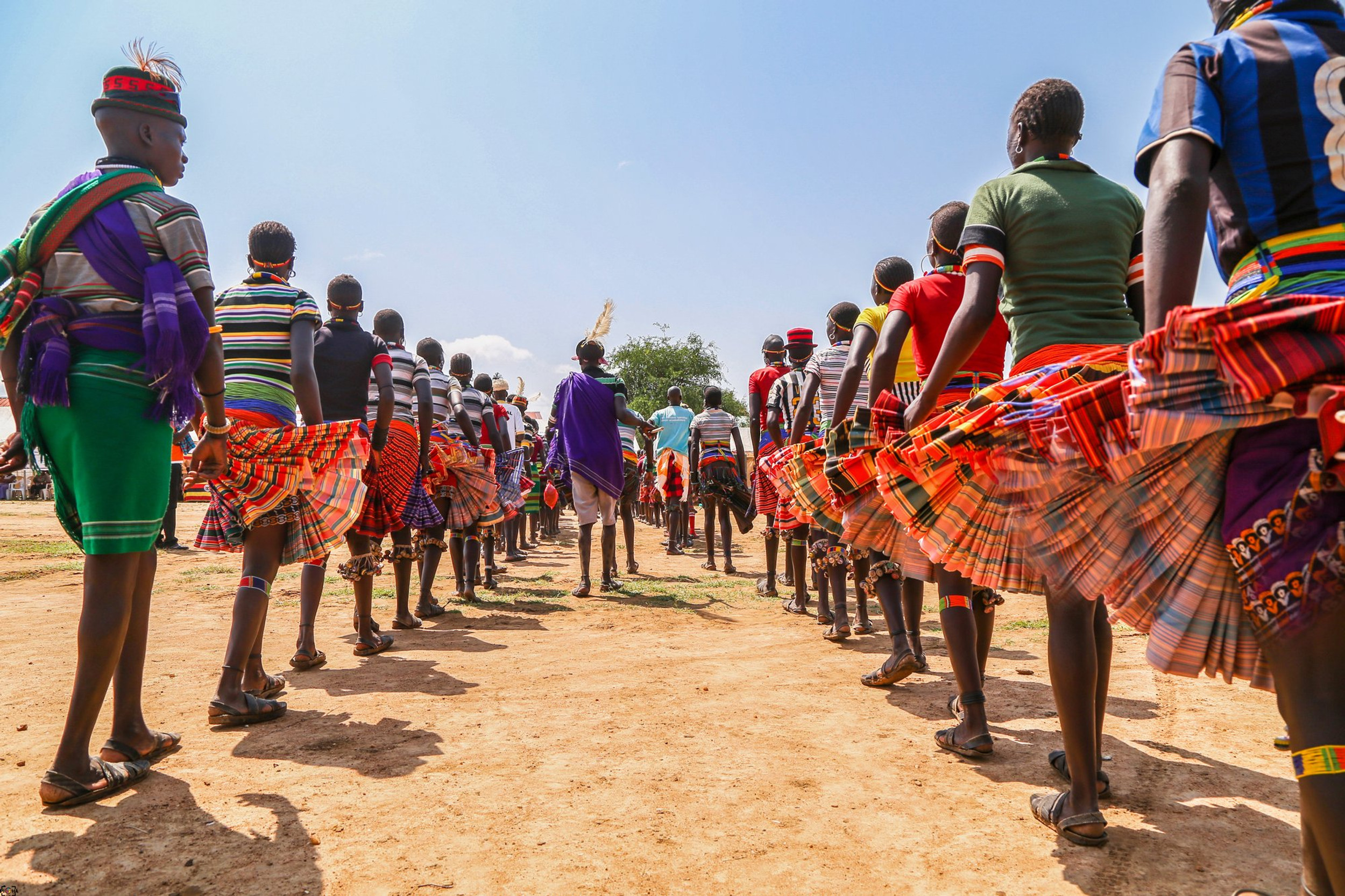
The Karamojong maintain a rich cultural tapestry, including music, dance, rituals and craftsmanship. Traditional dances are often performed during weddings, harvest celebrations, and initiation ceremonies. Beadwork, leatherwork, and intricate jewelry are significant markers of identity and artistry.
Spiritual life is deeply rooted in the land and livestock. The Karamojong believe in a supreme deity called Akuj and rituals often involve blessings for cattle health, rain and protection from harm. Oral storytelling is also crucial, passing down history, moral lessons, and survival wisdom from one generation to the next.
Lifestyle and Economy
Pastoralism dominates the Karamojong economy, with cattle providing milk, meat, hides, and trade value. Many families practice transhumance, moving herds seasonally to access pastures and water. Besides livestock, the Karamojong grow drought-resistant crops such as sorghum, millet, and maize, often supplementing their diets with wild fruits and vegetables.
Markets in Karamoja facilitate trade, allowing the Karamojong to exchange livestock, milk, and crafts for essential goods. Recently, tourism has begun playing a small but growing role, attracting travelers eager to witness traditional dances, beadwork, and daily life in a pastoralist community.
Challenges and Modern Adaptations
The Karamojong face significant challenges, including:
- Climate Change: Droughts and unpredictable rainfall threaten grazing lands and water sources.
- Cattle Raiding and Conflict: Historical cattle raiding has been a source of both inter-clan tension and cultural practice. Government and NGO interventions have helped reduce large-scale violence.
- Education and Healthcare Access: Remote locations limit access to schools and healthcare facilities. Community programs now aim to integrate modern education with traditional knowledge.
Despite these challenges, the Karamojong show incredible resilience. Many youth are combining traditional pastoralist knowledge with formal education and entrepreneurship, helping preserve cultural heritage while adapting to modern pressures.
Tourism and Cultural Preservation
Karamoja is emerging as a cultural tourism hotspot. Travelers can engage with the Karamojong through:
- Participating in traditional dances and ceremonies
- Visiting cattle camps and homesteads
- Observing craftsmanship and beadwork
- Experiencing the natural landscapes of northeastern Uganda
Tourism not only provides income but also encourages the preservation of cultural practices, offering the Karamojong community opportunities to share their heritage with the world.
The Karamojong of Uganda represent a compelling story of resilience, pride, and cultural richness. Their pastoralist lifestyle, intertwined with cattle, community, and spirituality, offers a unique perspective on human adaptation in semi-arid landscapes. Despite challenges from climate change, modernization, and historical conflicts, the Karamojong continue to thrive, keeping their traditions alive while embracing selective modern practices.
For those exploring Uganda, a visit to the Karamoja region is more than sightseeing, it’s an invitation to witness a living culture of resilience, beauty, and heritage that has endured for centuries.