Hippopotamus: The Beating Heart of Africa’s Rivers
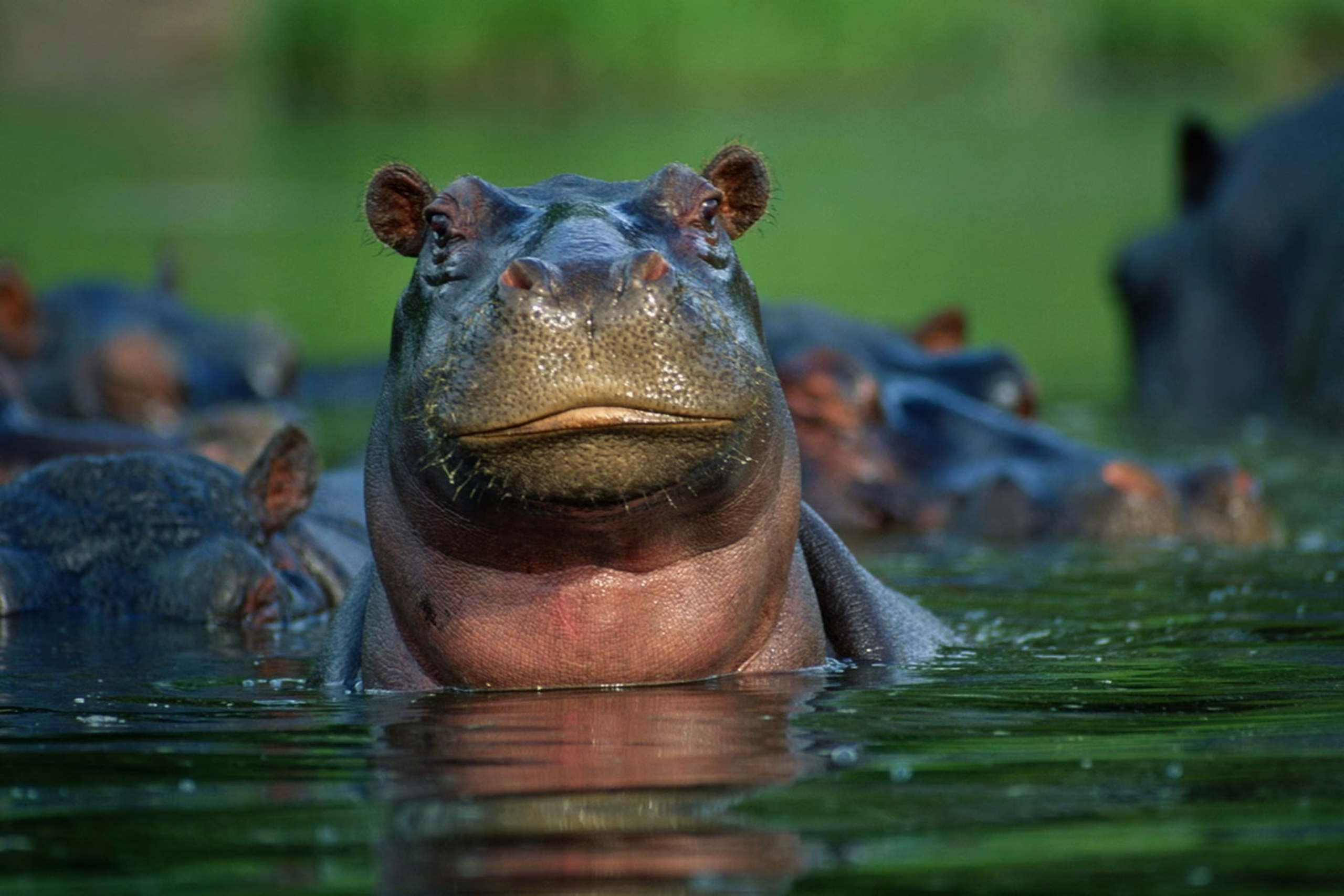
There is something deeply moving about watching a hippopotamus rise slowly from the quiet waters of an African river. At sunset, when the sky turns gold and the river reflects the fading light, a massive head breaks the surface, eyes calm, ears twitching, breath rising like mist. In that moment, the hippopotamus feels less like an animal and more like an ancient spirit of the river itself.
The hippopotamus (Hippopotamus amphibius) is one of Africa’s most powerful yet emotionally captivating creatures. Massive, mysterious and fiercely protective, hippos live a life that is deeply connected to the rhythms of water, family and survival.
For centuries, these giants have shaped Africa’s rivers, nurtured ecosystems and protected their young with a devotion that rivals any creature in the wild.
A Giant That Lives Between Two Worlds
The hippopotamus is the third-largest land mammal on Earth, surpassed only by elephants and rhinoceroses. Adult males can weigh over 3,000 kilograms, yet these enormous animals depend on water for their survival.
By day, hippos rest in rivers, lakes and wetlands across sub-Saharan Africa. Only their eyes, ears and nostrils remain above the water, allowing them to breathe and observe the world while staying cool beneath the sun.
But as darkness falls, the river giants awaken.
Under the cover of night, hippos leave the safety of the water and quietly walk across the savannah to graze. A single hippo can travel up to 10 kilometers in one night, eating around 40 kilograms of grass before returning to the river at dawn.
This daily journey between land and water has continued for thousands of years, shaping the natural balance of Africa’s landscapes.
The Deep Bond Between Mother and Calf
One of the most emotional moments in the wild is witnessing the bond between a mother hippopotamus and her calf.
Baby hippos are born underwater after about eight months of pregnancy. Moments after birth, the tiny calf instinctively swims upward to take its first breath of life.
From that moment on, the mother rarely leaves its side.
She protects her calf from crocodiles, lions and even other hippos. When the water grows deep, the calf may rest gently on its mother’s back as she glides through the river.
If danger approaches, the gentle river giant transforms instantly into a fearless defender.
This fierce protection is one reason hippos have a reputation for aggression. But what many people do not realize is that behind that aggression lies a powerful instinct to protect family and territory.
Rare and Fascinating Facts About Hippopotamuses
Despite their familiar presence in African rivers, hippos still hold many secrets that surprise even seasoned wildlife lovers.
- Hippos can run up to 30 km/h, faster than most humans.
- They can hold their breath underwater for up to five minutes.
- Their skin releases a natural reddish liquid known as “blood sweat,” which acts as sunscreen and antibacterial protection.
- Hippos communicate using low-frequency sounds that travel through both water and air.
- Groups of hippos are called pods, sometimes containing 30 or more individuals.
Even their appearance carries evolutionary mystery. Scientists have discovered that hippos are closely related to whales and dolphins, sharing a common ancestor millions of years ago.
The Silent Guardians of African Rivers
Few animals influence their environment as much as the hippopotamus.
Every night, when hippos graze on land and return to the water, they carry nutrients back into the river. These nutrients feed algae, fish and countless microscopic organisms that form the base of aquatic food chains.
Because of this, scientists often describe hippos as ecosystem engineers.
Their movements create pathways through wetlands, their feeding patterns shape vegetation, and their presence supports entire aquatic ecosystems.
In many ways, hippos help keep African rivers alive.
Where to See Hippopotamuses in Africa
For safari travellers, seeing a hippopotamus in its natural habitat is one of the most unforgettable wildlife experiences.
Some of the best places in Africa to observe hippos include:
- The Nile River in Uganda
- The Mara River in Kenya and Tanzania
- The Okavango Delta in Botswana
- The Luangwa River in Zambia
Boat safaris often provide the most magical encounters. The river grows quiet, the water ripples and suddenly dozens of massive heads rise from the surface, watching, listening, breathing in rhythm with the land.
A Giant Facing a Changing World
Despite their strength, hippopotamuses face growing challenges today. Habitat loss, shrinking rivers and illegal hunting threaten populations across parts of Africa.
As human settlements expand and water sources change, these ancient river giants are slowly losing the landscapes that have sustained them for centuries.
Protecting hippos is not just about saving a single species. It is about preserving entire river ecosystems and the delicate balance of life that depends on them.
The hippopotamus is far more than a powerful animal resting in African rivers. It is a devoted parent, a guardian of waterways and a living symbol of Africa’s wild heart.
When you watch a hippo emerge quietly from the water at sunset, you are witnessing a creature that has survived millions of years of change.
And in that moment, you realize something profound:
Africa’s rivers are not just landscapes.
They are living stories and the hippopotamus is one of their greatest storytellers.